Understanding How Gender Inequity Influences Health
August 12, 2026
The conditions in which people are born, grow, live, work and age strongly influence outcomes and contribute to health inequalities, with some groups experiencing poorer health than others.
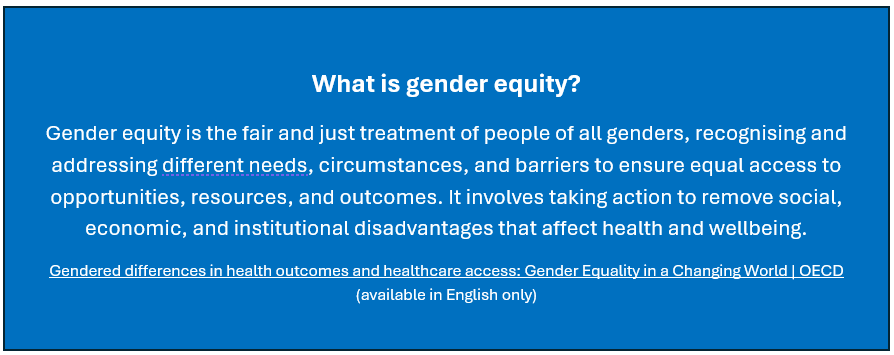
Gender equity is a key driver of a prosperous and inclusive society, enabling full participation in economic and social life. However, gender inequities (sex-based differences and inequalities) continue to shape exposure to risk, access to opportunities, and overall health outcomes of women and children. These inequalities intersect with other factors such as poverty, ethnicity and disability, compounding disadvantages, and shaping lived experiences in complex ways. The impact of gender inequity can be direct or indirect, with consequences that extend from individual health outcomes to broader systemic inequalities over the long term.
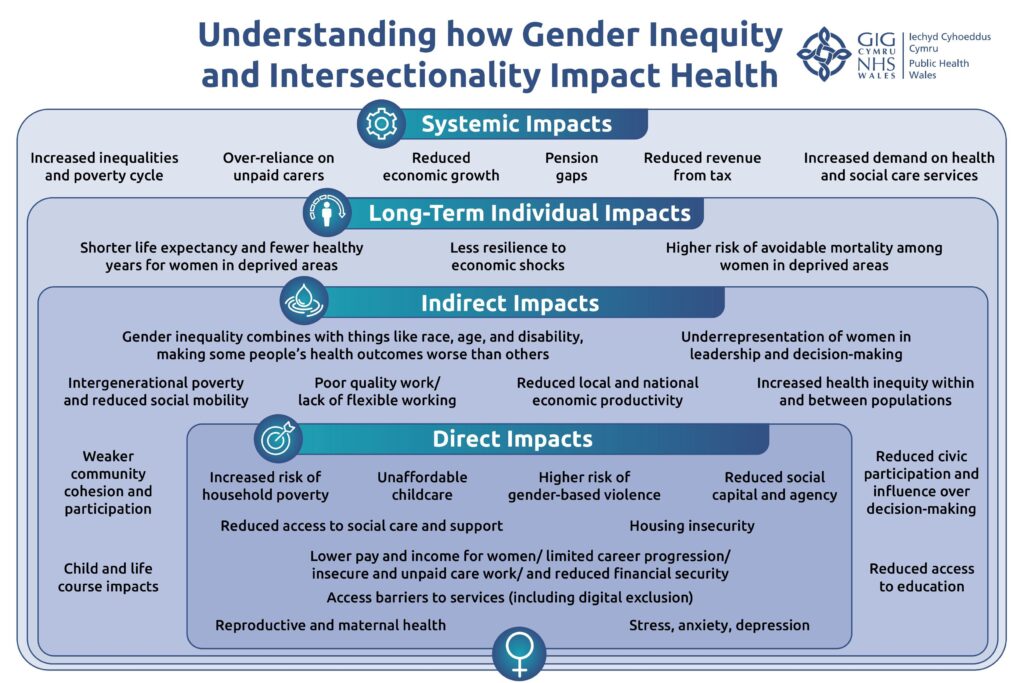
Figure 1: Understanding how Gender Inequity and Intersectionality Impact Health
The Five Essential Conditions framework highlights the importance of embedding a gender lens across policy and economic investment to better understand and address the root causes of health inequalities. Rather than viewing women’s health solely through a healthcare perspective, it emphasises the need for co-ordinated action across the wider determinants of health to achieve more equitable outcomes.
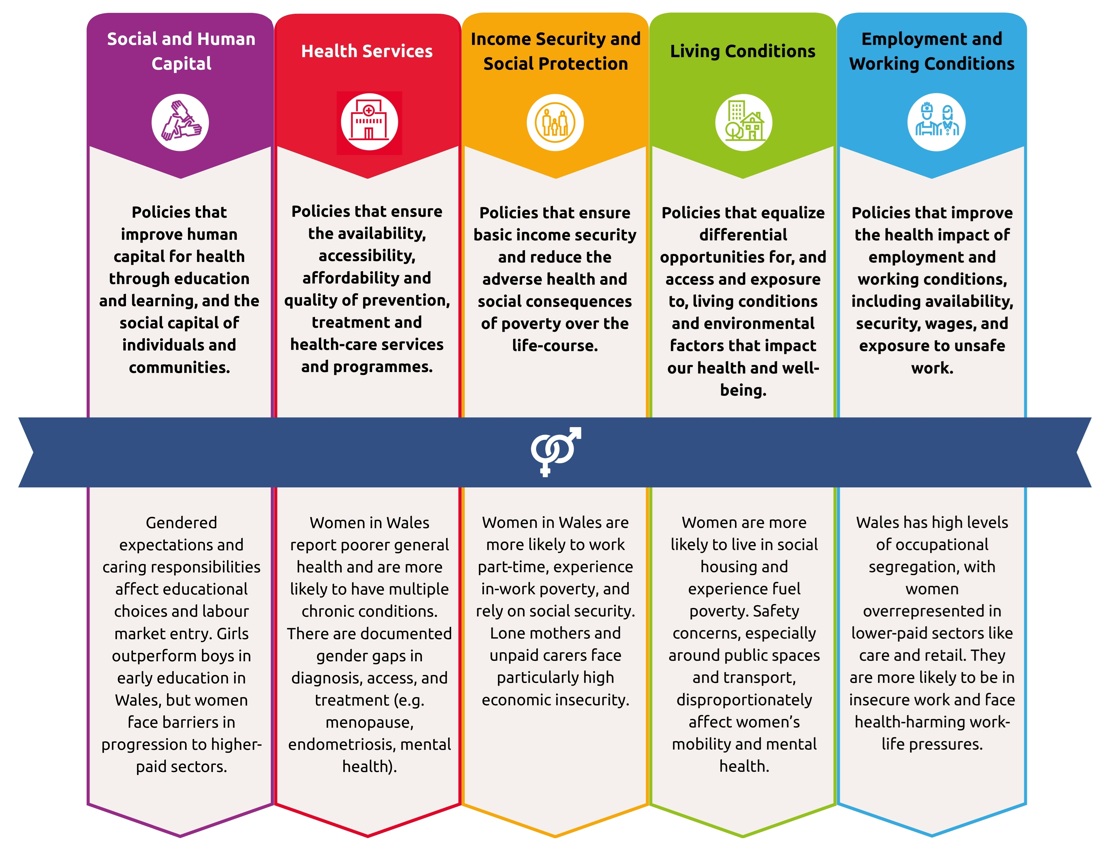
Figure 2: Gender as a Cross-cutting theme to the Five Essential Conditions for Health
Health Inequalities in Wales
In Wales, women’s health reflects wider social and economic inequalities. Between 2022 and 2024 in Wales, women living in the most deprived areas could expect to spend only around 47 years in good health, compared with approximately 66 years for women living in the least deprived areas. This represents a 19-year gap in healthy life expectancy between the most and least deprived communities, highlighting substantial differences in quality of life.
National Survey for Wales and research from Joseph Rowntree Foundation have shown that women are more likely to live in material deprivation and experience financial insecurity. Employment does not always protect against poverty, with many women in lower-paid and less secure work. These inequities not only directly impact physical and mental health but also have generational long-term disadvantages. A Public Health Wales and Liverpool John Moores University report highlighted the link between gender inequity and child poverty in Wales. However, these outcomes are not inevitable; they are shaped by social conditions and can be improved through targeted, system-wide action.
Skills for Systems Leaders to Reduce Inequalities in Wales
In 2026, Public Health Wales undertook a pilot for a workshop-based training project for professionals involved in developing a strategic response to the Women’s Health Plan (WHP). The WHP sets out a life course approach to improving women’s health and reducing inequalities by strengthening the knowledge, skills and behaviours needed to embed equity into planning, delivery and evaluation.
What is the approach?
This work piloted how applying a gender-informed and intersectional approach can be translated into practical system change, with the use of population health approaches. The project aimed to:
- Improve knowledge and understanding of the impact of gender equity and intersectionality on health outcomes
- Support the application of population health approaches in the development of Women’s Health Hubs
- Promote the use of disaggregated data and evidence to inform planning and evaluation
- Embed co-production and inclusive approaches in service design
A central element of the project was a Theory of Change workshop, which brought together stakeholders from across Health Boards and partner organisations, including the Fair Treatment of Women in Wales. This collaborative approach enabled a shared understanding of the underlying causes of gender inequities in health, alongside the barriers and enablers to change.
The workshops engaged 45 stakeholders from across Wales, including representation from multiple Health Boards and the voluntary sector. This project demonstrates how a gender- informed and collaborative approach can be translated into practical system change. The evaluation found that 93% of participants reported the workshop as very or extremely relevant. 100% of participants reported improved understanding of how disaggregated local data (e.g. sex, ethnicity, deprivation) can inform women’s health priorities.
The overall outputs included a co-produced Theory of Change framework, a narrative report, and a suite of training materials that will be available on Health Education and Improvement Wales Y Ty Dysgu Women’s Health Portal.
Informing Gender Equity Action Through Evidence-Based Solutions
Additionally, Public Health Wales is helping to build the evidence base for a fairer and healthier Wales through two recent reports on gender equity.
- The first is a brief on gender equity and economic participation that examines the gendered drivers of economic inactivity in Wales and highlights policy approaches such as gender mainstreaming, gender-responsive budgeting and wellbeing economy principles.
- The second report was developed in partnership with Liverpool John Moores University and explores how gendered experiences across the life course contribute to health inequalities and child poverty, with factors such as caregiving, disability, ethnicity and income shaping outcomes.
Together, these reports highlight the need for co-ordinated, gender-responsive action across employment, care, and social protection systems to reduce inequities and improve health outcomes.
Conclusion
Gender inequities are a significant driver of health inequalities, influencing opportunities, experiences, and outcomes throughout life. As the Welsh experience demonstrates, improving women’s health requires more than addressing individual health needs; it requires tackling the wider social, economic and structural factors that shape health and wellbeing. By adopting gender-informed, intersectional and life course approaches, and by building the capacity of professionals to embed equity into planning, delivery and evaluation, Wales is taking steps towards creating fairer health systems.